Winter is the most overlooked wedding season in the Smoky Mountains — and possibly the most dramatic. Here's what a December through February mountain wedding actually looks like, and why it's worth considering.
Ask most couples when they want to get married in the mountains and they'll say October, May, or "not winter." Winter gets dismissed as cold, gray, and bare. And it is all of those things — but bare trees mean wider views, cold means low humidity and clear photographs, and the Smoky Mountains in fog and mist in January look like something out of a film.
What the Smokies Look Like in Winter
The leaves are gone by late November. The bare ridgelines reveal the structure of the mountains in a way that's obscured by foliage in other seasons — you can see further, understand the topography more clearly, and the layered ridge effect that gives the mountains their name is more pronounced. The blue haze that the Smokies are named for persists year-round and is particularly atmospheric in cold air.
Snow is possible but not guaranteed. The Sevierville area gets meaningful snow perhaps 3–5 times per year, typically 1–4 inches. A winter wedding date doesn't come with a snow guarantee, but the possibility is real — and a light snow on ceremony day produces photographs that are simply unavailable in any other season.
Mountain fog in January and February is exceptional. The moisture from the valleys rises into the mountain hollows and creates dramatic fog banks that move across ridgelines. This is the atmospheric effect that makes Smoky Mountain winter photography iconic.
Temperature Reality
January lows drop into the 20s–30s°F on mountain properties. Daytime highs run 40–50°F in midwinter. This means outdoor ceremonies in winter require planning for guest comfort: heated outdoor options (patio heaters, fire pits positioned near seating), wraps provided for guests, and a ceremony timed to the warmest part of the day (typically 1–3 PM).
The Photography Case for Winter
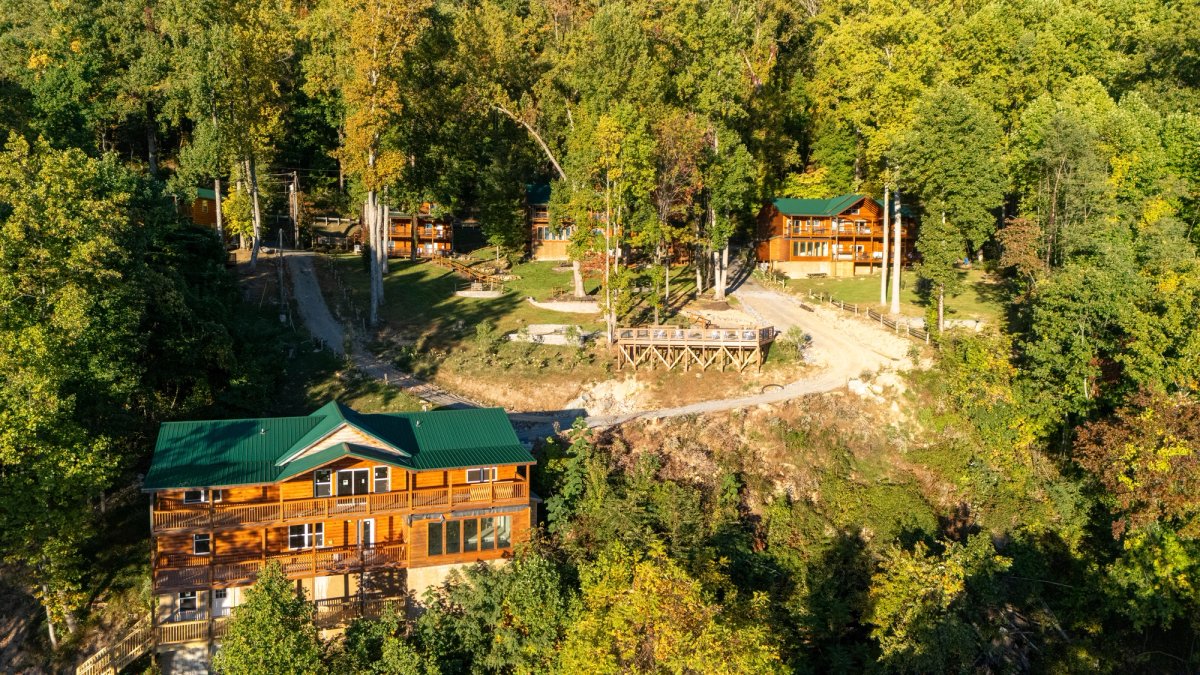
Grand Haven — Bluff Mountain (10 of 16)
Winter light in the mountains is extraordinary for portraits. The lower sun angle creates golden-hour quality light for a longer window than summer. Without foliage absorbing light, the mountain ridges reflect ambient light more openly. The muted color palette — bare bark, grey sky, white snow if present — makes the couple the clear visual subject of every photograph.
Photographers who shoot mountain weddings year-round will tell you that winter sessions are often their most technically interesting. If you're drawn to dramatic, moody, editorial wedding photography rather than bright and golden, winter is the season.
Why Winter Works Better Than You Think
Availability
December through February is the easiest time of year to get your preferred date. Last-minute bookings are occasionally possible in winter. If you want to get married sooner rather than later, winter may be your window.
Privacy
The Gatlinburg area in January is quieter than any other time of year. Mountain roads have less traffic. The sense of having the mountains to yourself is most real in winter.
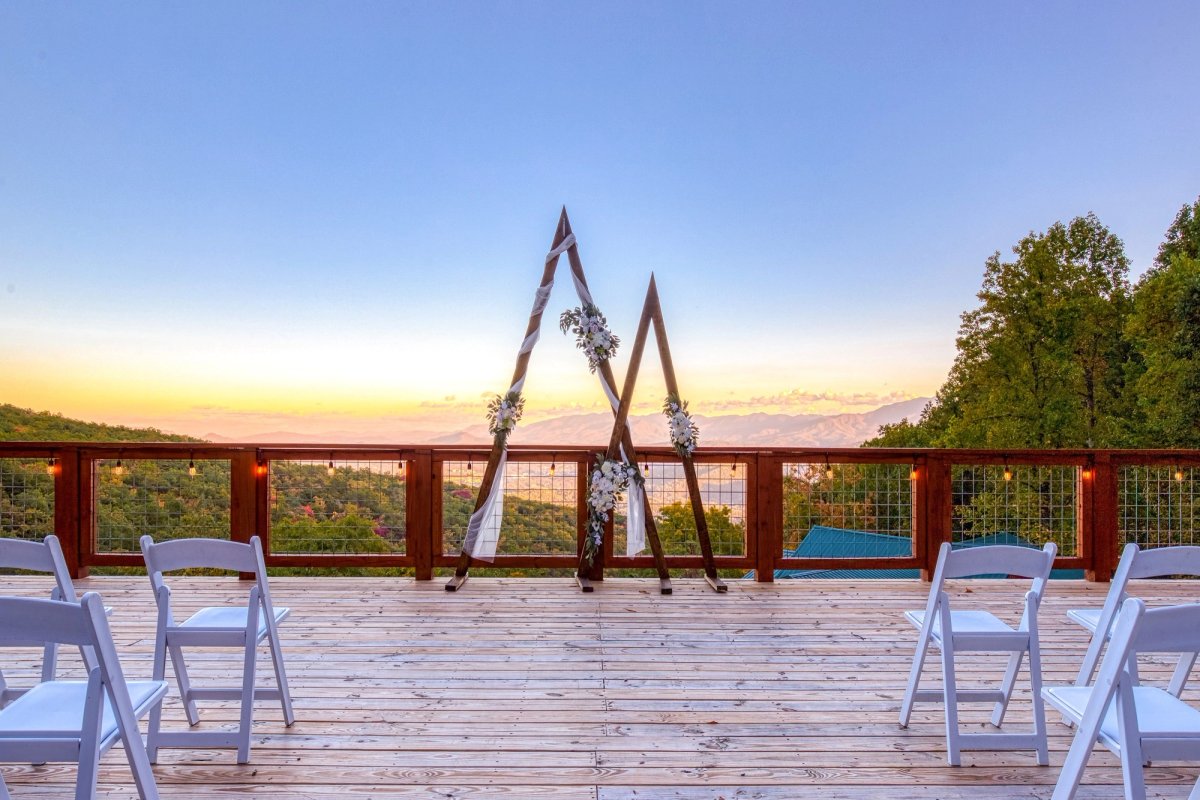
Grand Haven — 1(19)
What to Plan Differently for a Winter Wedding
- Indoor ceremony capability is more than a backup plan — treat it as the primary option with outdoor as weather-dependent
- Provide warming stations (heaters, hot cocoa/cider) for any outdoor cocktail hour
- Confirm road access to the property — mountain roads can be icy
- Sunset is early (5–5:30 PM in January) — plan your ceremony timing so portraits happen before golden hour ends
- Communicate weather honestly with guests — some guests, particularly older relatives, may prefer to stay home for a cold mountain weekend
Is Winter Right for You?
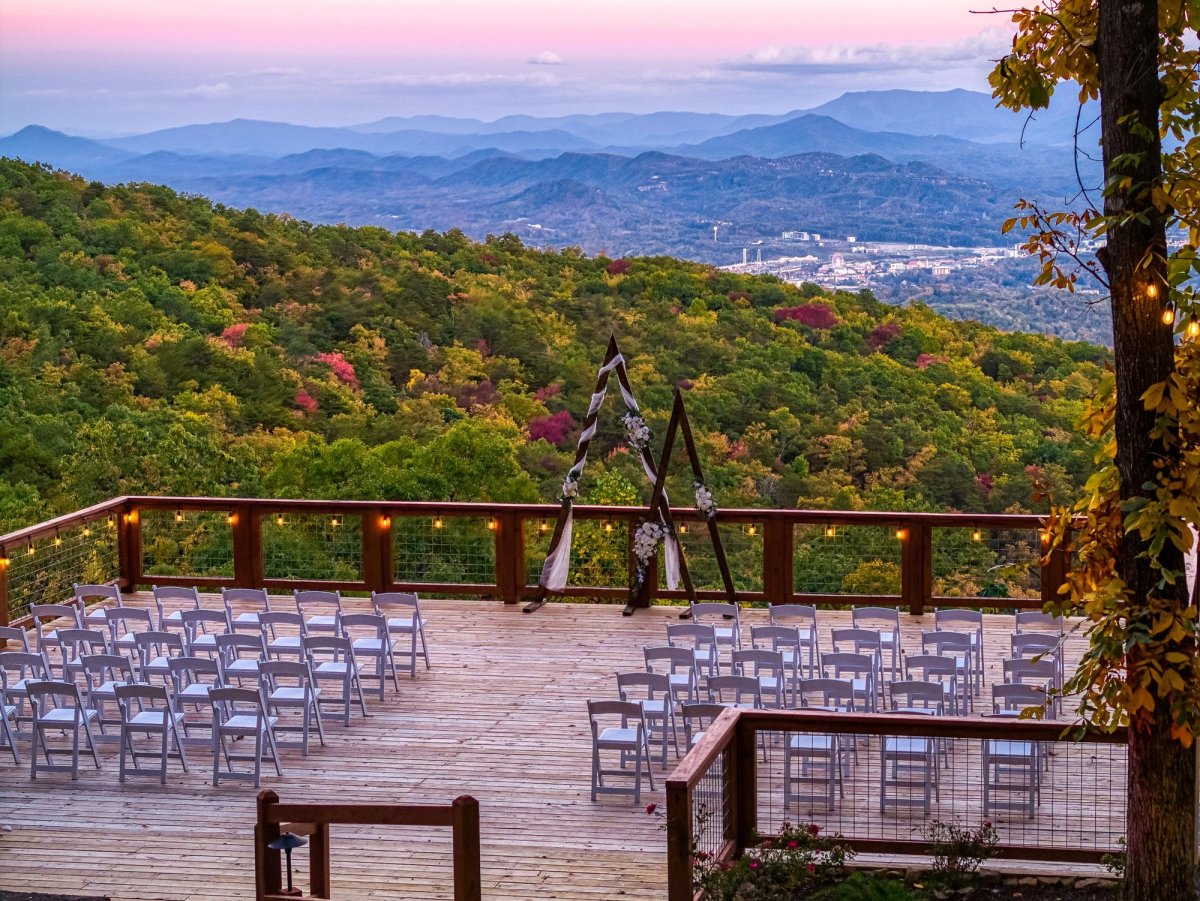
Grand Haven — 1(13)
Winter is right for couples who love dramatic, atmospheric aesthetics over lush greenery, want availability and flexibility, and are genuinely comfortable with cold — or excited by the possibility of a snowy ceremony. Our properties in winter have the same mountain views, the same exclusive use, and the same ceremony spaces — just in a quieter, more atmospheric version of the Smokies.
The Budget Case for Winter
The Knot's research shows that venue costs for 1–50 guests average $6,500 nationally — but that's across all seasons. Venues that offer off-season pricing can drop meaningfully in winter. Beyond the venue itself, winter availability means more flexibility on vendor scheduling, which often translates to better photographer and caterer options for your specific date.
Winter is also the season when our properties feel most private. The reduced tourist traffic on mountain roads, the quieter surroundings, the sense of the mountains belonging entirely to your group — it's a different quality of experience than peak season.
To see current winter availability and discuss whether the off-peak experience is right for your vision, reach out through our contact form. And for a full seasonal comparison, our best time of year guide covers every month honestly.
"Weddings aren't cheap, and given what our economy looks like right now, a lot of people are focusing on trying to save for a home."
— Mallory Lauder, Owner, Lasting Events, quoted in Global News
Lauder's observation — made to Global News — points to something real: a lot of winter bookings at our properties come from couples who are actively saving for a home purchase and want a meaningful celebration that doesn't deplete the down payment fund. A private mountain estate in winter gives them the full wedding weekend experience at the most accessible price point of the year.