People use "micro-wedding" and "elopement" interchangeably, but they're meaningfully different. Here's how to tell them apart, what each one actually involves, and how to figure out which one is right for you.
"We're thinking of eloping — maybe something small in the mountains." That sentence means something different to every couple who says it. To one, it means two people and a judge. To another, it means 40 people on a private estate. The language of small weddings is genuinely confusing, and it matters to get it right before you start planning — because the logistics, costs, and experiences are completely different.
Here's a clear breakdown of what each term means, where they overlap, and how to figure out which one fits what you actually want.
What Is an Elopement?
An elopement is a wedding ceremony with no (or very few) guests, typically just the couple and their officiant. The classic elopement is spontaneous — courthouse, two witnesses, done. The modern version is more intentional: couples hire a photographer, choose a scenic location, and plan a private ceremony that's fully theirs.
In the Smoky Mountains, popular elopement spots include viewpoints in Great Smoky Mountains National Park, Clingmans Dome, and various trail locations that require a permit. Some couples rent a small cabin for the night as a backdrop. The focus is exclusively on the ceremony itself.
Guest count: 0–10 (typically just the couple, officiant, photographer, and maybe a handful of close family).
What Is a Micro-Wedding?
A micro-wedding is a full wedding — ceremony, reception, dinner, dancing — just at a smaller scale than traditional. Typically 10 to 60 guests. It has all the components of a standard wedding: an officiant, vows, a meal, toasts, and usually some form of music or entertainment. The difference is the guest count and, often, the setting.
Grand Haven — 1(1)
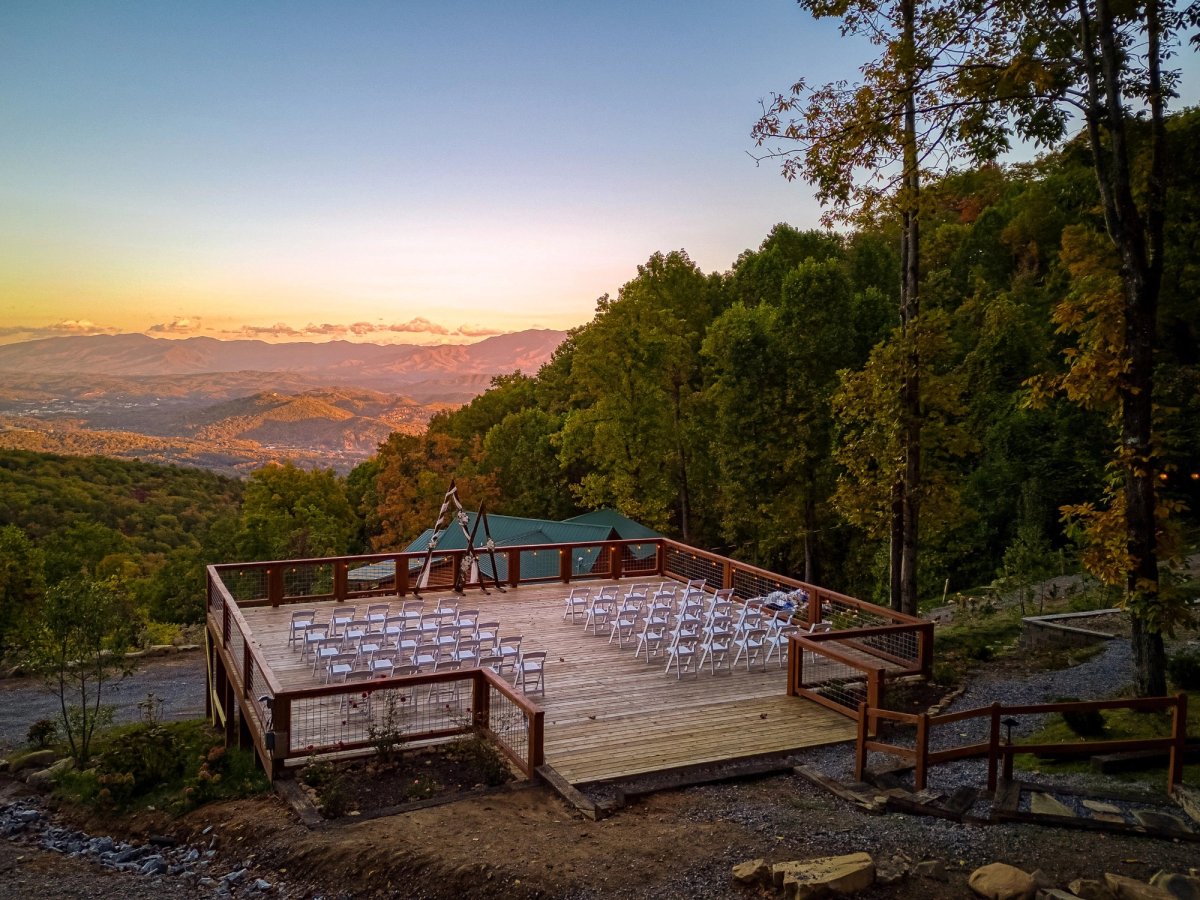
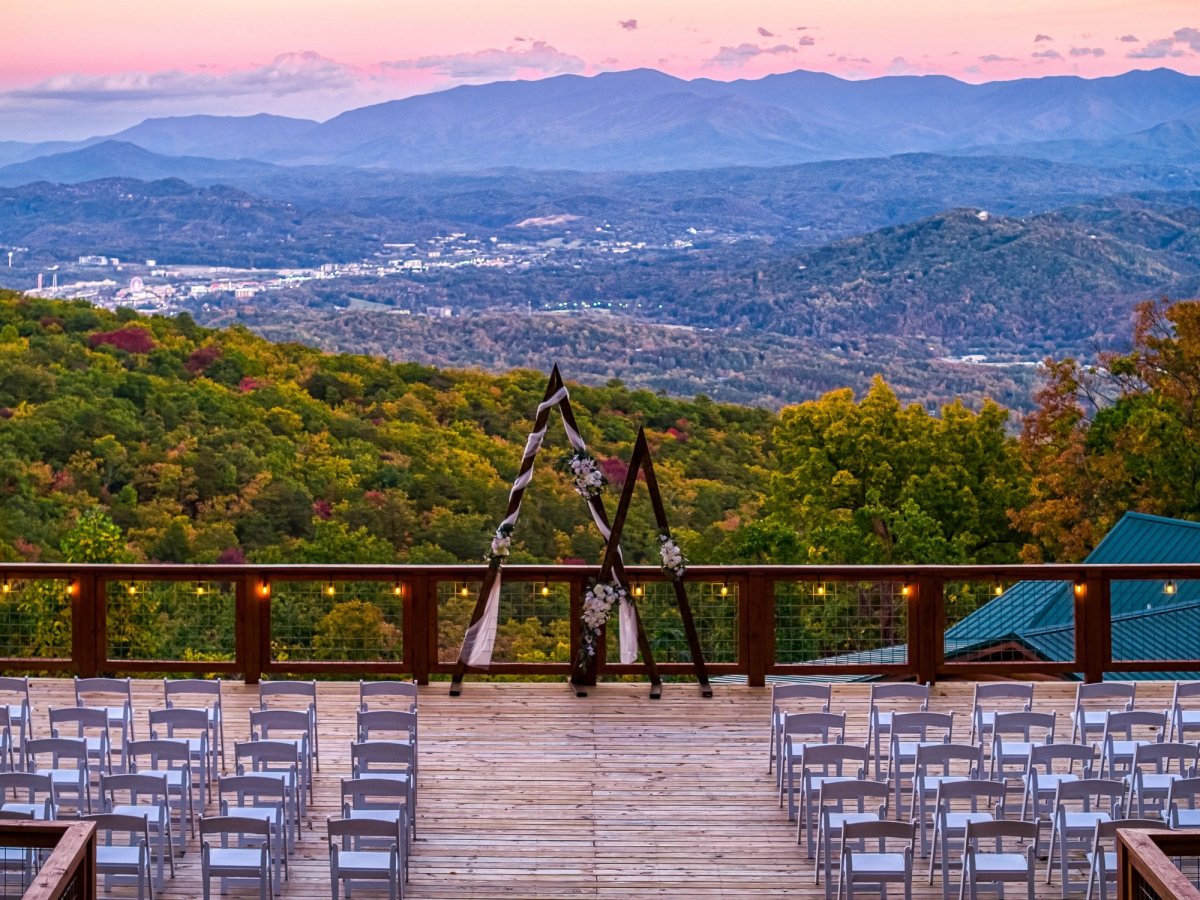
Micro-weddings at private mountain estates like ours include on-site lodging for the entire group, a dedicated ceremony space with mountain views, and room for a dinner and reception. Guests travel in, stay the weekend, and share the experience of the property together.
Guest count: 10–60.
Where the Lines Blur
The confusion comes from the middle. A ceremony with 8 guests and a catered dinner — is that an elopement or a micro-wedding? It depends on who you ask. For practical purposes, what matters more than the label is what you actually want:
- Do you want the experience to feel primarily about the two of you, or primarily about celebrating with people you love?
- Do you want a meal and a party, or just a ceremony?
- Do you want guests to stay and be part of a weekend, or in and out in a few hours?
- What's your budget, and what do you want to spend it on?
Grand Haven — 20251025untitled-DSC_3130
Those answers will clarify which category fits better than any semantic definition.
Which One Costs More?
Elopements are significantly less expensive. A mountain elopement with a photographer, officiant, and florals typically runs $2,000–$6,000 all-in. The ceremony is the entire event, so there's no catering, no reception venue, no entertainment.
Micro-weddings cost more because they include more — a venue rental, guest lodging, catering, and often a photographer, florist, and officiant. At Ghosal Experiences, venue packages start at $7,400, and most couples plan for $15,000–$30,000 all-in when you add catering, photography, and florals. That's still well below the national average for a full wedding, but it's a real difference from elopement pricing.
Which One Is Right for You?
Elope if: You want the day to be entirely about the two of you, you're not interested in a reception, and you're comfortable with family members who weren't invited.
Micro-wed if: You want to share the experience with people you love, you want a real reception with food and toasts and a proper celebration, and you're willing to invest more to do it right.
Grand Haven — 1(12)
Both are valid. The Smoky Mountains support both beautifully. If you're leaning toward a micro-wedding and want to understand what a venue-plus-lodging package actually includes, our What's Included page breaks down exactly what comes with a Ghosal Experiences booking.
The Cost Difference in Real Numbers
According to The Knot's 2025 catering data, the average wedding catering cost is $80 per person. For a 30-person micro-wedding that's $2,400. For a 100-person event, $8,000 — before bar service, which typically doubles the per-person cost.
Venue costs tell a similar story. The Knot's venue research shows that venues for 1–50 guests average $6,500 nationally, compared to $16,000 for venues accommodating 101 or more. The venue cost gap between a small and large wedding is nearly $10,000 before you've touched catering or photography.
See how our all-in venue-plus-lodging pricing compares to these national averages on our Pricing & Packages page.
"Our couples save anywhere from $15 to $40K by having a micro-wedding."
— Lauren Miller, Owner, Tiny Wedding Co., quoted in The Knot
Miller, whose company Tiny Wedding Co. specializes exclusively in micro-weddings, made this observation in a feature published by The Knot. The $15K–$40K range she describes aligns with the math: fewer guests means lower catering, venue, and florals costs across the board.
"I think, through COVID, people are understanding that micro weddings and small weddings are just as joyous and just as big of a celebration."
— Shannon Kennedy, Owner, Kennedy Event Planning, quoted in Global News
Kennedy's comment, made to Global News, reflects a shift that has continued well past the pandemic — smaller celebrations are no longer viewed as a compromise. For many couples, they're the preference.